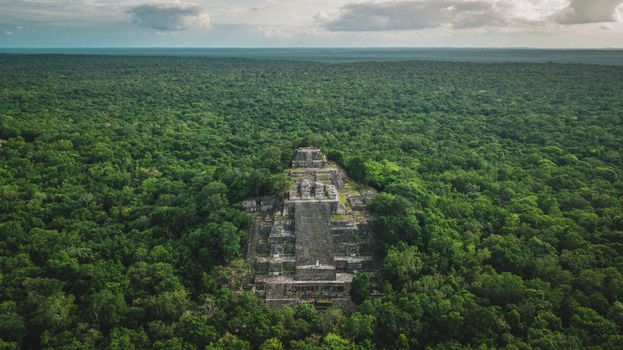
The city may have been home to 50,000 people
A student has accidentally uncovered a lost city in the Mexican jungle which is reportedly ‘the size of Edinburgh’.
The discovery was made in in the southeastern state of Campeche in the central American country.
The PhD student was sifting through data collected by archaeologists who had used a special type of laser surveying equipment known as Lidar to scan the jungle canopy and map what lies beneath the thick vegetation.
The student discovered three sites, which has been dubbed Valeriana, after looking through data on the internet.
“I was on something like page 16 of Google search and found a laser survey done by a Mexican organisation for environmental monitoring,” explains Luke Auld-Thomas, a PhD student at Tulane university in the US.
The hidden complex is thought to be second in density only to the largest Maya site in ancient Latin America, Calakmul.
Valeriana is made up of three sites, covering a size comparable to Edinburgh at 16.6 sq km.
Lidar uses thousands of pulses from lasers on a plane to map beneath plants and trees, however, Luke was able to identify what the archaeologists could not.
Processing the data with methods used by archaeologists, he uncovered a huge ancient city which was potentially home to 30-50,000 people at its peak from 750 to 850 AD – more than the modern day population of the region.
The city was named Valeriana by Luke and his colleagues after a lagoon in the proximity.
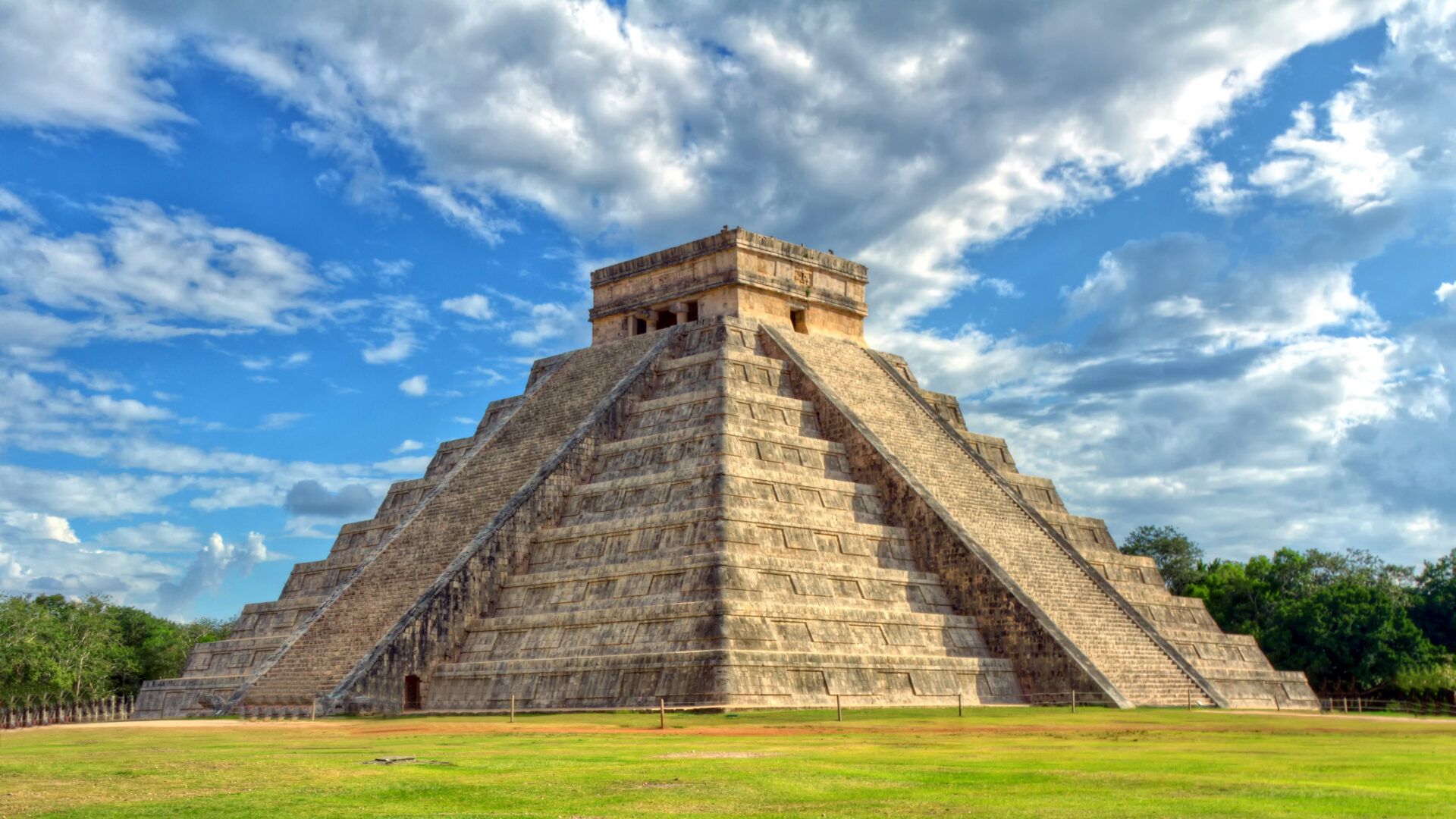
The discover is significant because it helps to further challenge the western notion that the Tropics is where “civilisations went to die”, as per the co-author of the research, Professor Marcello Canuto.
It is uncertain what led to the demise of the city, however, experts suggest climate change was a major factor.
Archaeologists describe Valeriana has being “hidden in plain sight” as well as bearing the hallmarks of a capital city.
In fact, the ancient city is located only a 15 minute hike away from a major road near Xpujil where lots of Maya people now live.
The city appears to have had two city centres with two large building with dense housing in between.
Related links:
There were also two plazas with temple pyramids, a religious landmark for Maya people where they would have worshipped.
The ancient city even had a court where people would have played an ancient ball game.
Meanwhile, evidence of a reservoir suggests that people used the landscape to support a large city.
Across three different sites in the jungle, 6,764 building were uncovered.
With the use of Lidar technology, archaeologists are hopeful more sites like Valeriana will be uncovered in the future.