Who would have thought that?
The true story behind The Good Nurse, a new Netflix film starring Eddie Redmayne as a serial killer, is extremely dark, possibly darker than the show.
Basically, a show about a serial killer who murdered 29 people over a 16-year spree turns out to be a sickening true crime tale. Not that shocking.
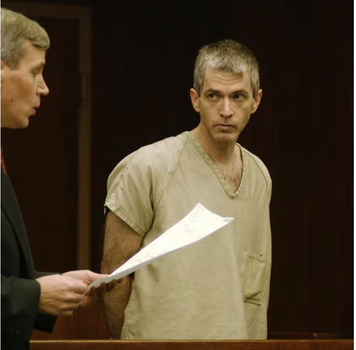
The story behind Eddie Redmayne’s new show tells the shocking story of Charles Cullen, a nurse who worked in hospitals around New Jersey and Pennsylvania over a 16-year career that ended when he was arrested in 2003 and admitted to killing 29 people.
His common method was by administering fatal drug overdoses. Now, in the true nature of recent entertainment shows there’s a Netflix film about it.
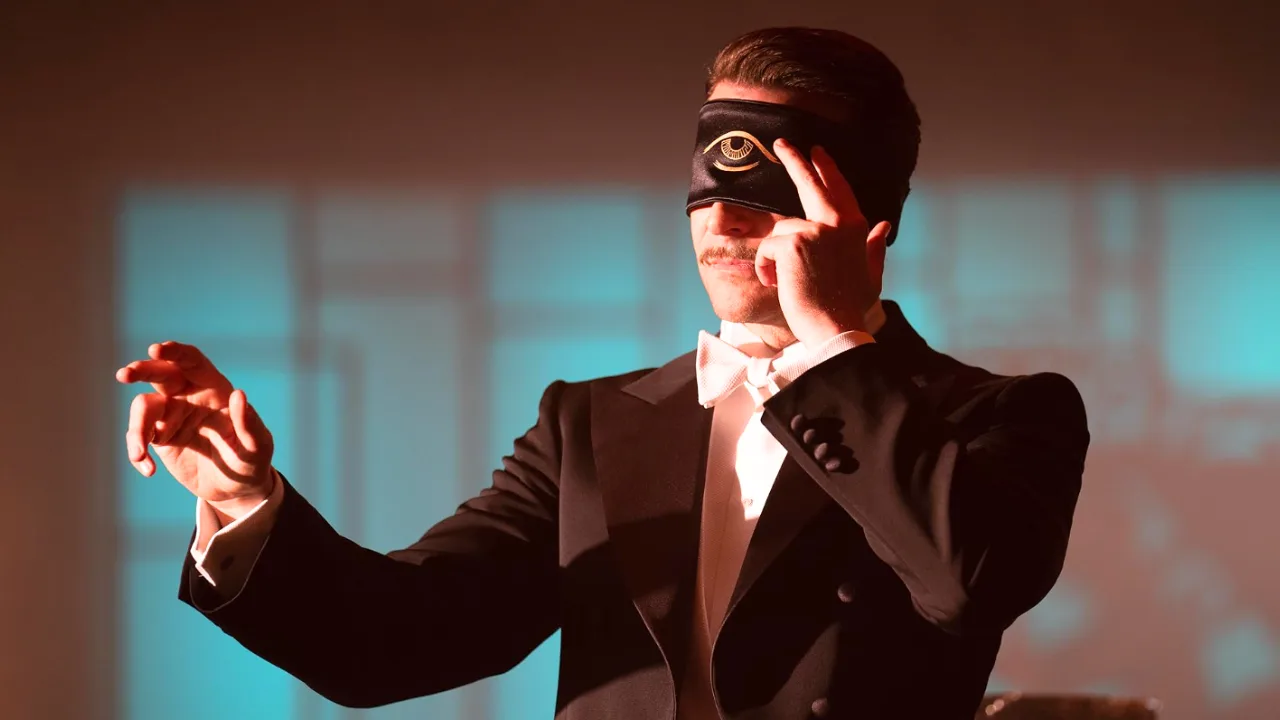
Eddie Redmayne plays the titular ‘good nurse’ Cullen whilst Jessica Chastain plays Amy Loughren, a former co-worker who was ultimately instrumental in helping the authorities bring Cullen to justice.

The whole story is also based on the 2013 book about Cullen’s crimes by journalist Charles Graeber, entitled The Good Nurse: A True Story of Medicine, Madness, and Murder.
That book was so popular – even though based on the truth – had horror writing legend Stephen King singing it’s praises.
Drawing on his own character – also a nurse – from Misery, King wrote: “You think Annie Wilkes was bad? Check out this chilling nonfiction account of Charlie Cullen.”
Cullen was known to have had a ‘miserable’ childhood, with both his parents dying before he left senior school.
Then, after joining the US Navy his behaviour became troublesome and he became known as a loner.
He was medically discharged after a suicide attempt in 1984, after which he made a career U-turn and trained to become a nurse.
For years, Cullen flitted around different hospitals, often working on cardiac and intensive care units where people can sometimes die suddenly and unexpectedly.
It’s believed he started killing in 1988, when John W Yengo Sr. died of what was at the time described as a ‘rare allergic reaction’.

But after Cullen’s arrest, it turned out – as reported by The Associated Press in 2004 – that while Yengo had been admitted to St Barnabas Hospital due to an allergic reaction, Cullen killed him by injecting him with a drug that stopped his heart.
‘”I was always suspicious because it happened so quickly,” Yengo’s daughter told the news agency at the time. “’Without knowing anything different, I assumed it was God’’s will. Clearly it wasn’t.”
In 1993, Helen Dean, 91, a patient at Warren Hospital, was recovering from breast cancer surgery when Cullen entered her room, asked her son Larry to leave, and gave her an injection. The next day, she became “violently ill”, Graeber writes in his book, and died of heart failure.
A post-mortem examination conducted in 1993 did not test for digoxin, a substance that later turned out to be frequently used by Cullen in his killings. Helen Dean’s death was deemed to have been the result of natural causes, but Larry Dean was convinced Cullen had killed his mother. He died in 2001, before the nurse was arrested and his crimes revealed. In 2004, Helen Dean’s body was exhumed for further testing. Cullen eventually admitted to killing her.
In 2003, the Reverend Florian Gall was taken to the Somerset Medical Center in New Jersey with pneumonia and sepsis. Though he was seriously ill and placed on a ventilator, his loved ones hoped he would recover, as he had done during previous bouts of sickness, The New York Times reported. One morning in June, Gall went into cardiac arrest and could not be resuscitated. His body was exhumed after Cullen’s arrest, and Cullen eventually pleaded guilty to killing the priest by injecting him with digoxin.
Even when Cullen was fired from a job, which happened several times over the course of his career, he was able to find work at new facilities. In its later examination of the case, The New York Times posited this was mainly due to “weak” reporting systems at the state and federal level for healthcare workers, and because “employers frequently [refused] to pass on negative information, even about people they have fired, for fear of being sued for slander by the former employee.”
In the end, he confessed over seven hours and received 11 life sentences in 2006.
He’s still in prison in Trenton, New Jersey.
The Good Nurse is streaming on Netflix now.
Related links:
- Jeffrey Dahmer has finally been knocked off Netflix’s top spot by extremely dark new series
- Real final words of Jeffrey Dahmer have been revealed
- Kesha’s mother apologises for writing ‘insensitive’ Jeffrey Dahmer lyrics following backlash