The capital city has been dubbed ‘unliveable’
When it gets round to summer time most Brits dream of jetting off to warmer climates, envious of their scorching sun and clear blue skies.
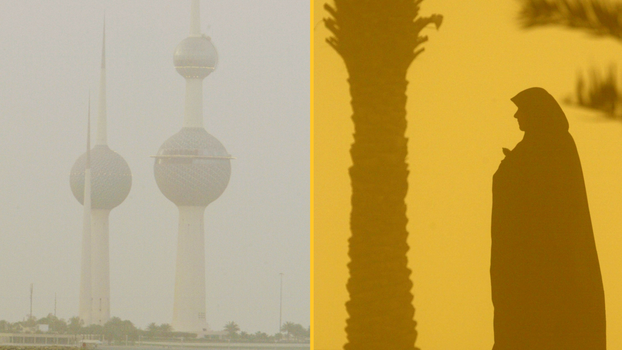
However, as we know, too much of a good thing can often to bad and there is no place where that adage is more applicable than Kuwait City located on the tip of the Persian Gulf.
The city located in the country of the same namesake, has been setting records left right and centre, but unfortunately not for the right reasons.
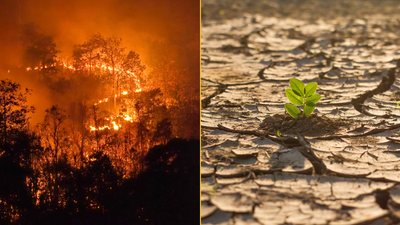
Here it has been reported that birds have dropped dead from the empty blue sky and seahorses have boiled in the bays that skirt its beaches.
The Arab state used to have a busy fishing industry and attracted many tourist looking for a guaranteed tan.
Now, however, the temperature has become so hot that guaranteed sun is the last thing locals want has hot weather passes into the dangerously scorching kind for human beings.
Just eight years ago, a local weather station in northern Kuwait recorded a temperature of 54C, the third-highest reading ever recorded globally, only 2.7C behind the infamous Death Valley reading recorder in 1913.
However, the difference is only a hand full of people live in Death Valley in the USA, while 3.3 million inhabitants call Kuwait City home.
Kuwait has always been hot, however it is the need to cool down so many people as well as the more frequent abnormal spikes of sweltering heat which have defined the last decade in the country.
Now climate scientists have warned that temperatures in the country are predicted to rise by 5.5C by the end of the century compared to the 2000s while it is also noted to be heating up faster than the rest of the world.
Just back in 2021, temperatures passed the halfway point to boiling water exceeding 50C for 19 days, a record that is already at threat this year.
Although birds have an internal temperature of 40C, it is understandable how constant 50C weather would lead to eventual heat exhaustion for these animals as well as for mammals including humans whose body function on an internal temperature of 37C.
Related links:
Furthermore the concrete jungle that results form urban sprawl only exacerbates the scorching sun, creating a veritable furnace for its locals.
On local, Joshua Wood, wrote in ExpatsExchange that although Kuwait City is “modern” and “luxurious”, the heat can become “insanely hot” in June, July and August.
This is just about liveable for those who can afford to work indoors and pay their electricity bills with air conditioning making up two thirds of the average residential electricity bill in the country.
However, it mainly migrant workers who suffer from the heat, making up 70% of the population and hailing from Arab, South and South East Asian nations.
Most of these workers are tied down by the kafala system which give responsibility of workers to their employers and work in physically draining sectors such as construction or household services.
Research has found that temperatures in Kuwait contribute to a potential tripling of mortality rate risk in the nation.
The Institute of Physics suggested that by the century’s end, climate change could cause heat-related deaths to rise by 5.1% to 11.7% across the entire population.

This number could rise to 15% for non-Kuwaiti individuals who make up the migrant work force.
Meanwhile when it comes to addressing the issue that climate change is having in the region, Kuwait is stuck in a vicious cycle.
At COP26 the country could only commit to a small reduction in emissions (7.4%) by 2035 highlighting the increasing demand for energy in the state which is mostly going to cool down building interiors.
Ultimately in attempting to cool itself off, the country is only heating itself up by further in an endless struggle as energy use is expected to triple by 2030.
For now the country will keep on fighting the heat while birds continue to fall from the sky and fish fry in the sea, the trends are distressing and the signs almost biblical.