The ultimate meteorological double-header could be on the cards
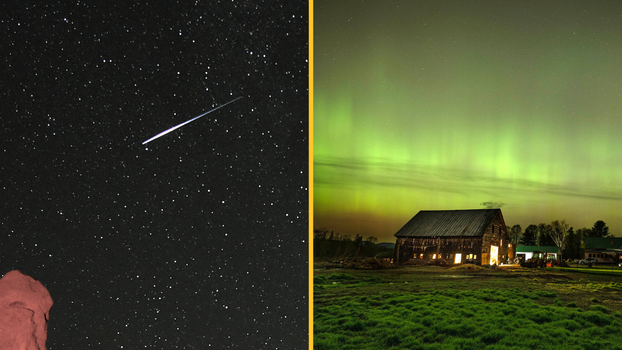
The biggest meteor shower of the year is set to be visible along with the Northern Lights in the UK this weekend.
The incredible double up of meteorological phenomena could provide breath-taking vistas for people in the UK to enjoy as long as the skies stay clear.
The meteor shower, known as the Perseids, is almost guaranteed to be enjoyed by all in the Northern Hemisphere as the event is a regular occurrence, appearing in August every year.
However, it will be the backdrop of the Norther Lights that will have to hold up their end of the bargain, with reports suggesting they will be visible in northern parts of the UK.
The US National Oceanic Atmospheric Administration (NOAA) have reported that major solar activity could lead to a major geomagnetic storm, causing the aurora.
NOAA reported that two plumes of plasma, known as coronal mass ejections will hit the Earth’s atmosphere just as the Perseids are reaching their peak.
The Perseid meteor shower has been visible since mid-July however will hit its peak 11 August.
At its most peak, observers can expect to watch up to 100 ‘shooting stars’ per hour, or one every 36 seconds.
Scientists from NASA and the European Space Agency (ESA) advise people that the best time to see the shower of meteors will be in the early morning after midnight.
Related links:
They also said stargazers can expect between 50 and 100 meteors per hour during its strongest period, and they can all be seen without specialist equipment.
On its website NASA said: “The Perseid meteor shower, which peaks in mid-August, is considered the best meteor shower of the year.
“With swift and bright meteors, Perseids frequently leave long ‘wakes’ of light and colour behind them as they streak through Earth’s atmosphere.”
Areas with minimal light pollution are best for observing the meteors as per the ESA who also advise to avoid looking at screens or other bright objects in the half hour before going to watch the shower in order to allow the eyes to adjust to the dark.
There will be several observatories live streaming the night sky on the night that the Perseids peak.
The Perseids get their name from the Perseus constellation from where the meteors appear to come named after the hero in Greek mythology of the same namesake.
Meteors come from debris that is shed from comets that then hit the earth’s atmosphere expulsing bright streaks of light as the friction burns up the particles high in the sky.
The Perseids originate from the comet Swift-Tuttle.
A meteor is a meteoroid that burns up in the Earth’s atmosphere while a meteorite is a meteoroid that reaches the Earths surface.
Meteoroids are typically 2mm to 1m in size while an asteroid is anything larger.
A comet is a large ball of frozen gas, rock and dust that orbits the sun.