Something similar is happening with social media.
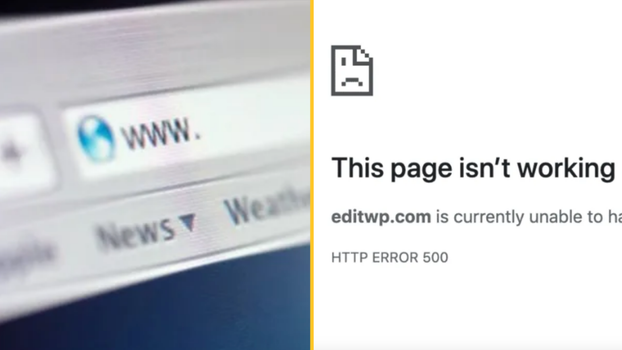
A new study has revealed that the internet is disappearing, with web pages and online content becoming lost for good.
The research was conducted by Pew Research Center, and the results showed that vast swathes of its are being lost as pages are deleted or moved.
According to the research, a quarter of all webpages that existed at one point between 2013 and 2023 are no longer accessible.
Of the webpages that existed a decade ago, 38 per cent are now lost.
Even newer pages are disappearing: 8 per cent of pages that existed in 2023 are no longer available.
Some 23 per cent of news pages include at least one broken link, and 21 per cent of government websites, it said – and 54 per cent of Wikipedia pages include a link in their references that no longer exists.
Much the same effect is happening on social media. A fifth of tweets disappear from the site within months of being posted.
Nearly one-in-five tweets are no longer publicly visible on the site just months after being posted.
In 60% of these cases, the account that originally posted the tweet was made private, suspended or deleted entirely. In the other 40%, the account holder deleted the individual tweet, but the account itself still existed.
Certain types of tweets tend to go away more often than others. More than 40% of tweets written in Turkish or Arabic are no longer visible on the site within three months of being posted. And tweets from accounts with the default profile settings are especially likely to disappear from public view.
Related links:
The study was completed by gathering a random samples of almost a million webpages, taken from Common Crawl, a service that archives parts of the internet.
Researchers then looked to see whether those pages continued to exist between 2013 and 2023.
It found that 25 per cent of all pages collected between 2013 and 2023 were no longer available.
Of those, 16 per cent of pages came from a website that continues to exist, while 9 per cent were located on websites that no longer exist at all.
On the plus side, it might mean that some of those cringey Facebook posts from 2009 and Bebo profile pictures won’t come back to haunt us.